UEFA Nations League
Has the 'gap' closed? England's progress under Thomas Tuchel faces defining Spain test
England have made progress since their World Cup heartbreak, but, as Tom Hamilton writes, a showdown with Spain will reveal just how far they've come.
Tom Hamilton ·
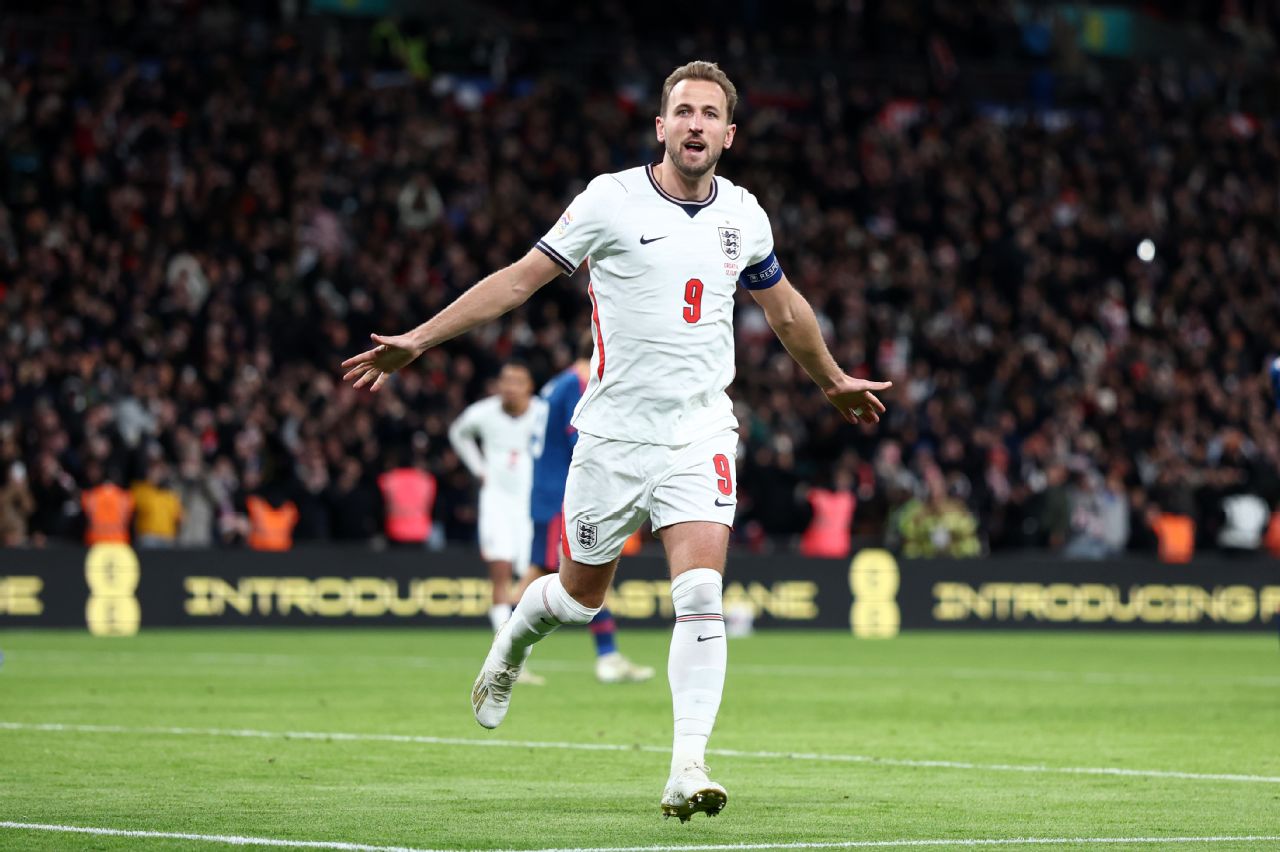
It was a routine win for England over Croatia, where none of Thomas Tuchel's players were off-your-seat exceptional. The paper planes thrown around the freezing stadium suggested as much.
England's attack was functional with Morgan Rogers the standout there, while the defence was vulnerable at times, but ultimately kept Croatia out in the closing stages to preserve the 2-1 victory. It will be remembered as Harry Kane's record-breaking night, but few moments on the field will live long in the memory. And that's understandable as everyone in that England team has an eye on Madrid on Sunday.
As Tuchel measured the win post-match, there was a matter-of-factness about his assessment: "It was a tight match, a tough one, because we didn't take our chances when we had the chances and it can't always be super exciting, sometimes we just have to be serious and determined." Then came the qualification: "We got the job done. We wanted the win. We wanted the final on Sunday in Spain."
It's always been about Spain, the Metropolitano and Madrid. Ever since England lost their Nations League opener 3-2 at Wembley, still feeling the post-World Cup hangover effects, Spain in Madrid offers them a chance to prove progress, but also frame how the whole of 2026 will be remembered.
England have their Nations League quarterfinal spot secure, but Sunday gives them a chance to prove how far they have evolved and whether the World Cup gremlins are firmly buried or still lingering in the back of their mind.
It's been a year where England travelled to America with the potential of winning the entire World Cup. Memories of the heroic win in Mexico are still held close, but the euphoria of that 3-2 triumph in the bouncing Azteca, in the torrential rain, and with 10-men is always tinged by what followed two matches later and the defeat to Argentina where England went 1-0 up but lost their way and fell 2-1. England went for Everest, but fell short of the peak, again. The second star remained elusive.
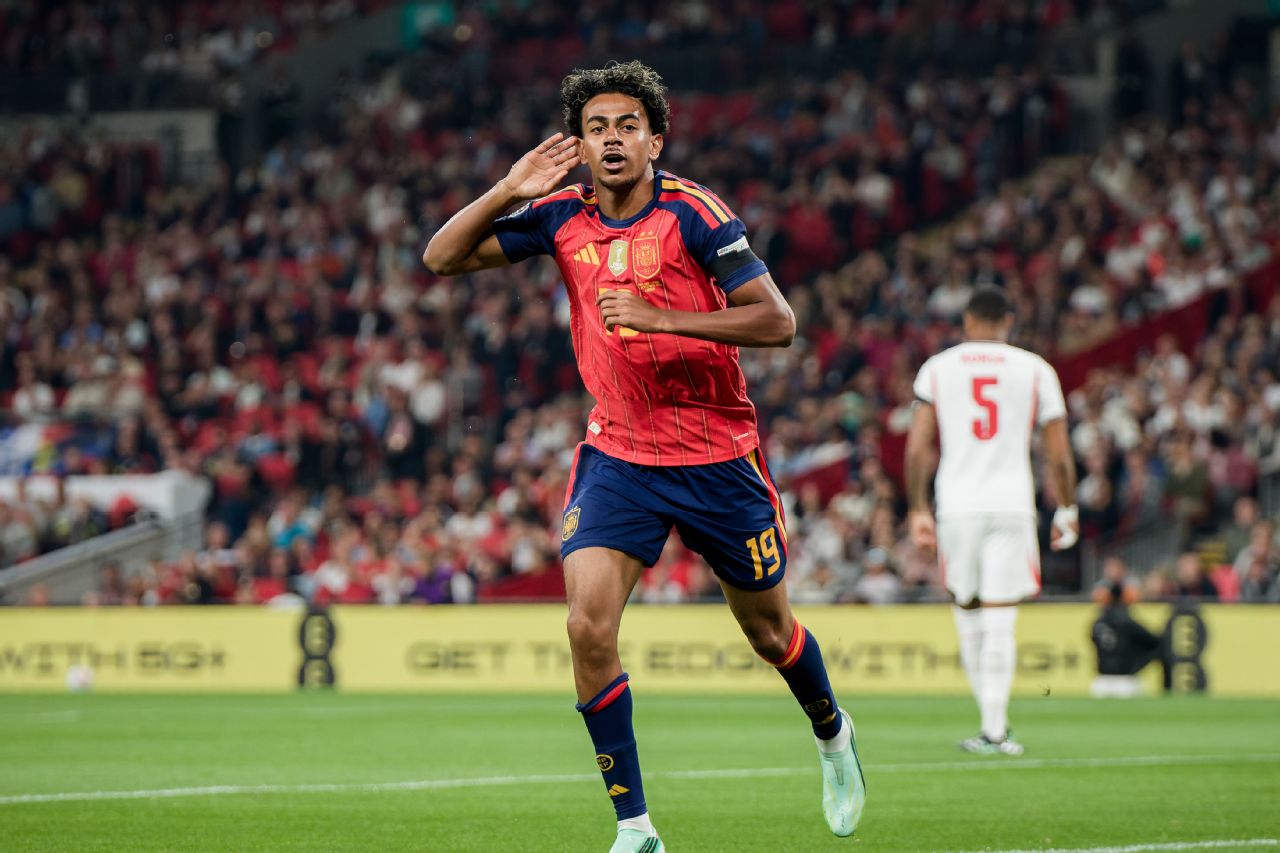
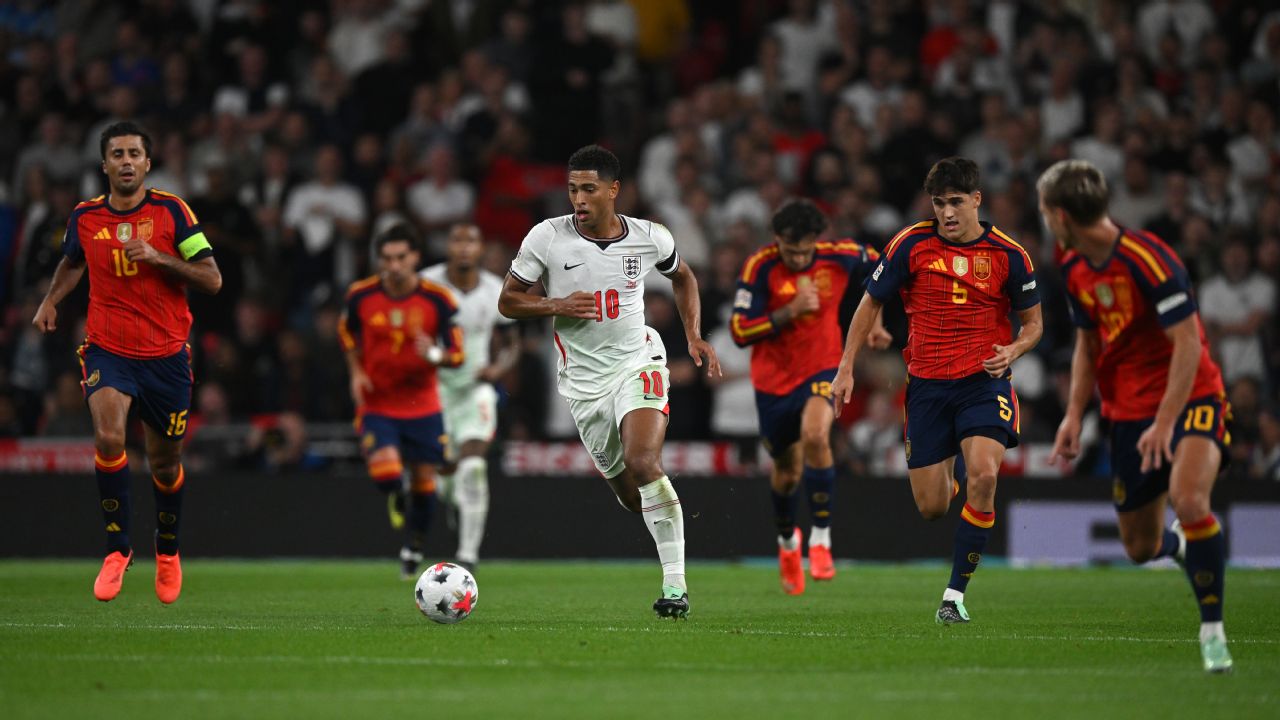
Spain at Wembley was their first match after the World Cup. It was the hardest possible reintroduction to international football, and their public. Tuchel was still in the maelstrom of the post-World Cup comedown. As he named his squad back in September, he was bemused at the perceived negativity around the Argentina defeat, saying 99.9% of public feedback had been positive.
But he was stuck in limbo: tainted by the past, desperately wanting the future to reframe reaching the semifinal in a more positive light, while also moving forward and evolving his England side.
Yet he seemed conflicted, and everything was seen through the prism of world champions Spain. Tuchel said he was "wrestling" with himself over whether to embrace chaos, or pursue control, while qualifying he didn't have time to coach the players to control matches more effectively.
"How many English players are there in these teams really trying to control matches? Is this in our DNA? Do we really value control? Is this something that makes us feel good in a match? Is this something that comes easy to us?" Tuchel said at the time. He asked rhetorically that when the proverbial hits the fan, can England suddenly become "Spain for 15 minutes?"
The gap to Spain
You'd have heard a lot about the "gap." Before the France bronze match in Miami, Tuchel was assessing where England stand in relation to the other best teams in the world. He said: "I think the gap is there because of the titles that Argentina, France and Spain have as national teams, as countries. What they built over many years with the coaches and the team, there's still a slight gap that we have to close."
Fast-forward to September, and he said of Spain: "We feel the gap is closing and we feel that we are close and we want to prove a point." Mind the gap.
Anthony Gordon summed up England's identity crisis at the time. "England as a nation, we don't have that strength like the Spanish, where we control games like they do," Gordon said. "It's not in us. I'm not sure it's something that can be taught because now I think playing in Spain, I can speak with an educated view on the way they keep the ball is different.
"I don't know what it is, something that maybe we can't ever put a name to, but they're definitely built different. But I think it's important for us, where we can't keep looking at other countries and trying to be like them because we're not them. We're English, and we have our own strengths, which they don't have. So maybe we start playing to what we're good at."
As England took their first post-World Cup steps on Sept. 26 against Spain, we saw them play with character and what they're good at, while teasing at the potential of what they can achieve when things click. Tuchel also started to win the public back around again. In the 57th minute, with England 2-1 up, the fans sang Tuchel's name for the first time post-World Cup. They went on to lose 3-2, but there was a renewed sense of optimism.
After the 2-0 win in Prague, and the 7-0 triumph against Croatia, by the time Czechia came back to Wembley 10 days after the Spain game, supporters sang Tuchel's name within the first couple of minutes. It was the same against Croatia on Thursday. Redemption, for the time being.
Are England ready for Madrid?
Now comes the acid test, however, of where England stand. England's record against the best teams in the world hasn't stacked up well in recent times -- with just six wins out of their previous 16 matches against teams ranked inside the top 10. Meanwhile, Spain have remained peerless over the course of the Nations League, their run a remarkable 43 matches unbeaten. But on Sunday, they will be without their injured talisman Rodri.
If England are to win in Madrid, then their defence needs shoring up. It was far too porous against Croatia, with Tuchel picking his 11th different centre-back partnership of Jarell Quansah and Dan Burn, with both Marc Guéhi and Ezri Konsa injured. But for some last-gasp blocks from Burn and Quansah, Croatia would've got a result. Hall looked the most accomplished of the back four, but each of the quartet had moments where they looked vulnerable.
Croatia's goal will make ugly viewing when England watch it back -- their inability to clear the corner, Quansah's tame header back towards Pickford, Trent Alexander-Arnold's flat-footedness, leaving Peter Sucic in space to finish. Through Tuchel's reign, against the best teams, the defence has looked stretched at times. Memories of the Spain match are still vivid and further defensive errors: Guéhi their opener, O'Reilly for the second and a collective passivity for the third.
England will hope to have Konsa back for Sunday, who'll bring familiarity and solidity there. If he's fit and starts alongside Burn, then that's centre-back partnership number 12 for Tuchel. But if Konsa returns, you can see Alexander-Arnold dropping out and Quansah or Ben White, a player Tuchel really admires, starting at right-back.
At the other end of the field, England's use of the cross-field pass was effective. That ball helped unpick Croatia's defence as Kane's ball across the width of the field found Jude Bellingham who teed up Rogers. Using Bellingham and Rogers at the far post proved effective. England need to be more composed at the back when playing out, but also mix up their attack.
In the middle of the pitch, Elliot Anderson and Declan Rice will be key in disrupting Spain's metronomic rhythm. Give Spain the chance to build momentum, and it'll be death by a thousand passes.
As Tuchel named the squad for this window, he frequently referred to the atmosphere and togetherness in the group. He was concerned the "brotherhood" ethos he's placed so much emphasis on was going to falter in the last camp given the absent personnel, but the squad remained tight, with new leaders coming through. Continuation led us to Croatia, where England did enough to tee up the "final" with Spain on Sunday. That's all progress.
But Spain remains the barometer. A win in Madrid and this will be held as a year where England took steps forward. A defeat would leave you wondering just what England need to do to reach the next level.
Tuchel, though, is certainly confident England have evolved -- now it's on them to show it.
"Everything will be different," he said after the Croatia game. "Completely different scenario, completely different setup, but I'm very positive that we will get what we want."